How KwikAds helped Shop Unrush boost ROAS by 37% in 3 months
How KwikAds helped Shop Unrush boost ROAS by 37% in 3 months
How KwikAds helped Shop Unrush boost ROAS by 37% in 3 months
How KwikAds helped Shop Unrush boost ROAS by 37% in 3 months
Kwik Checkout
What is Single Sign On (SSO) Login? How Does It Help Uplift Checkout Conversions?
 14 Mar 2026
 06 Min Read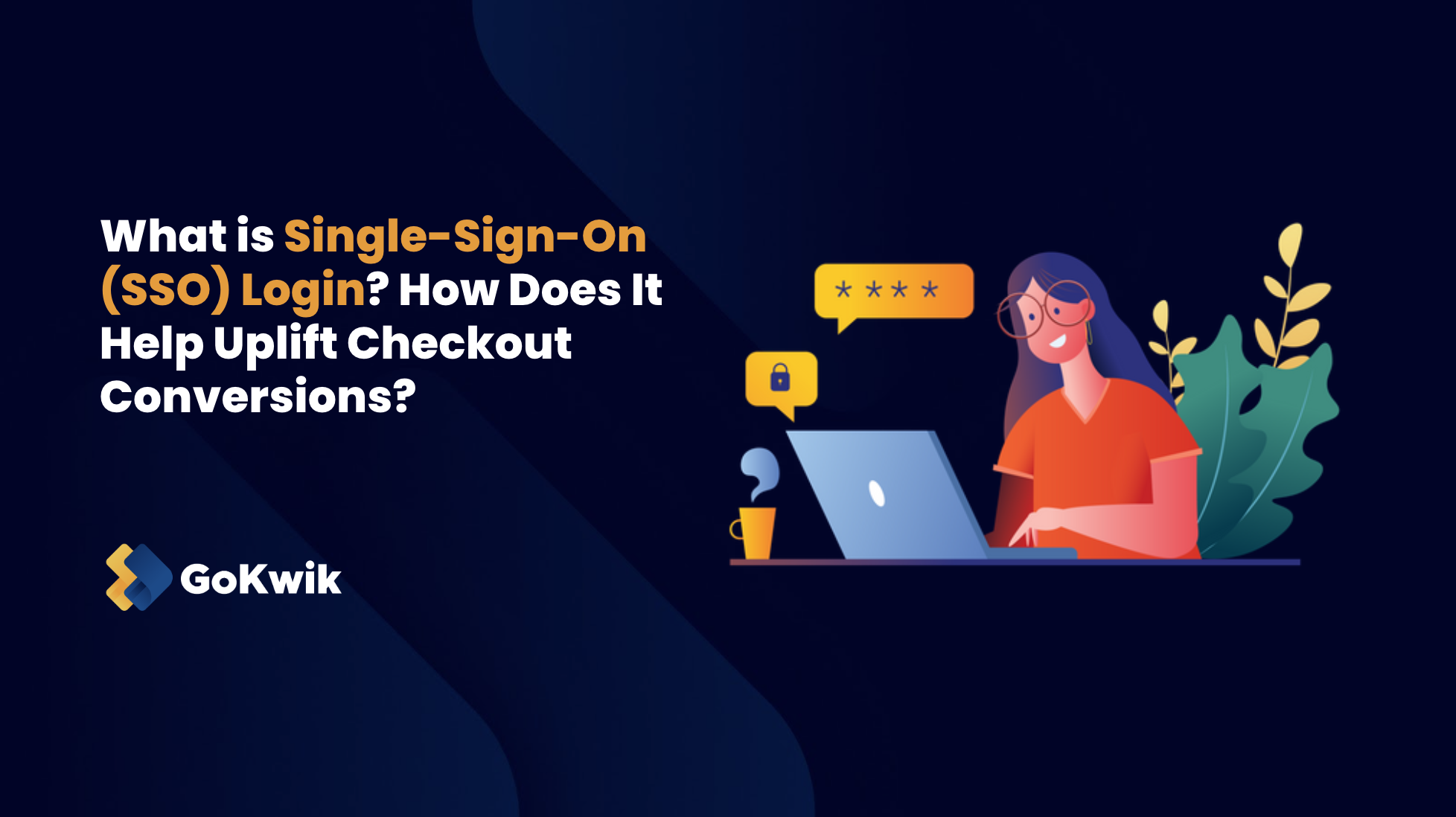
Vardhan leads product and growth initiatives at GoKwik, driving D2C e-commerce innovations, conversion optimization, and scalable growth programs for products. An ISB alumnus based in Bengaluru, he brings expertise from Unacademy, Ola, and Mahindra in building high-impact product strategies.
Read this blog on your favourite platform
With 2023 coming to an end, we can surely claim that the Indian eCommerce industry is now at a stage where it’s maturing. Both marketplaces as well as D2C brands are understanding the importance of a good checkout funnel to uplift checkout conversions. But, what it takes to build a successful one is where too many experiments are happening. Some claim that eCommerce brands should offer a guest checkout option or add form validation to reduce errors. Many suggest that focusing on displaying a progress bar or showing order details is the smarter way to increase checkout conversions.
While we, at GoKwik, believe that each of these tactics is helpful in its own way, optimising the very first step - the login step - is what can make or break a game for any eCommerce brand. For a simple reason, 70% of all carts are abandoned at the login stage. This leads to an increase in customer acquisition cost and fall in conversion rate.
One innovative solution that we believe can revolutionise the way customers interact with an online store is Single Sign-On (SSO) login. This unique technology,
- Simplifies the login process
- Plays a pivotal role in enhancing customer experience
- Helps boost checkout conversion rate
- Aids in reducing cart abandonment rate at the login stage
In this blog, we aim to decode every aspect of Single Sign-On (SSO) login for utmost clarity and delve into how GoKwik’s SSO login can help brands increase checkout conversions.
What is Single Sign-On Login (SSO Login)?
Single Sign On or otherwise referred to as SSO is a user authentication process that allows an online shopper to access multiple websites and applications with a single set of login credentials.
In the context of eCommerce, SSO eliminates the need for users to create and remember separate usernames and passwords for different online stores they visit. Instead, a single authentication process grants access to a network of affiliated retailers.
Here's a simple example to explain how SSO works in the context of eCommerce.
Imagine a customer, Gargi, who loves online shopping. She frequently shops across various eCommerce websites and buys different kinds of products from a multitude of brands.
Without SSO login,
- Gargi decides to buy from Website A and creates an account with a unique username and password.
- Later, she finds Website B and has to go through another account creation process to place an order.
- As Gargi continues to explore new eCommerce brands, she’s forced to create different accounts on each of these online stores in order to place orders.
In an ideal scenario, Gargi may get irritated and annoyed, and may switch to buying products only from marketplaces where she doesn’t need to login again and again.
Meanwhile, with SSO login in place,
- Gargi visits an eCommerce platform that offers SSO login powered by GoKwik
- She simply logs in via OTP and is all set to begin her shopping spree
- Once logged in, Gargi lands strait on the address page reducing a step in the checkout journey
- Gargi then decides to explore a new online store within the GoKwik network (Website B) and discovers that she’s already logged in thanks to GoKwik’s SSO login feature.
- Later, she discovers another affiliated store (Website C) and enjoys the same one-click checkout experience, despite having never visited that particular site before.
By streamlining the authentication process, SSO significantly improves a user’s shopping experience, making it more likely for them to return, complete transactions, and increase checkout conversions.
What Are The Benefits Of Single-Sign-On Login By GoKwik In eCommerce?
SSO login By GoKwik offers an array of benefits to eCommerce brands. As stated above, this simple yet effective piece of tech-art designed by GoKwik contributes to,
- A seamless shopping experience
- High checkout conversions
- Enhanced security
Let's now delve into the key advantages of SSO login.
1. User Convenience
SSO login by GoKwik swiftly simplifies the entire login process by allowing users to access multiple eCommerce platforms with a single set of credentials. This eliminates the need to remember and manage multiple usernames and passwords.
For instance, Arjun frequently shops from various online stores. With SSO login powered by GoKwik, Arjun can simply log in on a GoKwik partner merchant’s site via OTP and stay logged in on all other 1200 affiliated eCommerce brands automatically.
2. Time Savings
SSO login significantly reduces the time and effort it takes for an online shopper to register and log in to each individual eCommerce site. This streamlined process contributes to a more efficient and enjoyable shopping experience, meanwhile increasing checkout conversions.
For instance, Emma is a busy professional. She doesn’t have time to log in to different D2C sites to shop and place orders. Alternatively, she’d rather do a quick search on a marketplace, add items to cart, and place an order. However, with SSO login, Emma can stay logged in across thousands of GoKwik-affiliated brands and take advantage of fast checkout experience.
3. Consistent User Experience
SSO login by GoKwik ensures to provide a consistent experience across all its affiliated eCommerce sites. Shoppers enjoy a uniform interface and navigation, which contributes to a seamless and recognisable experience, further uplifting checkout conversion rate.
4. Reduced Friction
Since SSO login by GoKwik eliminates the need for a shopper to create multiple usernames and remember all the passwords, this considerably reduces friction in their buying journey. This reduction further leads to,
- An increase in customer engagement
- Higher repeat purchases and customer retention
- Building a loyal customer-base
5. Faster Checkout & Reduced Abandonments
Since shoppers can easily login via OTP and remain logged in across GoKwik’s affiliate partner network, it significantly speeds up the checkout process and minimises the risk of cart abandonment to a great extent. In fact, according to GoKwik’s analysis, shoppers using SSO login convery 2X faster.
6. Cross-Platform Access
As explained above, SSO enables shoppers on the GoKwik network to automatically stay logged in on affiliated eCommerce platforms. This cross-platform access allows shoppers to skip the login stage and directly land on the address page pacing the checkout process.
For example, Jacky used GoKwik’s SSO login to log into a sports eCommerce platform affiliated to GoKwik. If he now goes to shop on a beauty brand that’s a part of the GoKwik network, Jacky will not be asked to login. Instead, when he clicks on the checkout button of the beauty brand, he will directly land on the address page.
The cross-platform access helps reduce checkout conversion frictions and even the chances of cart abandonments.
Bottom Line,
SSO login by GoKwik delivers a host of benefits that enhance the overall customer experience, making it more convenient, efficient, and secure. These advantages contribute to increased customer satisfaction and loyalty, ultimately driving higher checkout conversion rates for online retailers.

AUTHOR
Vardhan Jain
Director of Product Program @ GoKwik