|
Store Element |
What You Need |
Why It Matters |
|
Platform selection |
Shopify, WooCommerce, Magento, or custom build |
Choose based on budget, speed, integrations, and growth plans. |
|
Domain setup |
A clean domain name linked to your brand |
A simple domain improves recall, trust, and search visibility. |
|
Must-have pages |
Homepage, product pages, About, policy pages |
These pages answer questions before shoppers reach checkout. |
|
Product content |
Clear product descriptions, images, and size details |
Better content reduces confusion, returns, and support requests. |
|
Mobile experience |
Fast pages and thumb-friendly navigation |
Most Indian shoppers browse and buy through mobile devices. |
|
Conversion tools |
Reviews, FAQs, offers, and trust badges |
These elements help new customers feel safer before purchase. |
|
Search visibility |
search engine optimization basics on every page |
SEO helps search engines understand your products and categories. |
How to Start an E-Commerce Business in India: A Step-by-Step Guide
 11 Jun 2026
 17 Min Read
Read this blog on your favourite platform

What Is an Ecommerce Business?
Benefits of Starting an Ecommerce Business in India
- Starting an online store requires lower capital than opening a physical retail location or mortar stores in any Indian city.
- Your ecommerce store can reach over a billion internet users across India without geographic limitations on your customer base.
- A well-built ecommerce website operates around the clock, accepting orders and processing payments while your team sleeps.
- Tools like Google Analytics and platform dashboards give you real-time data to optimize conversion and improve customer experience daily.
- India's logistics and payment infrastructure now supports small business sellers with affordable shipping and fast settlement options.
Types of Ecommerce Businesses
- B2C (Business-to-Consumer): B2C brands sell finished products directly to individual customers through their own website or third-party marketplaces. Amazon, Flipkart and Myntra operate as B2C marketplaces, while standalone brand websites represent the D2C subset of this model.
- B2B (Business-to-Business): B2B ecommerce brands sell products or services to other businesses in bulk or through subscription contracts. IndiaMART and Udaan are strong Indian examples of B2B platforms connecting manufacturers with retailers and resellers.
- C2C (Consumer-to-Consumer): C2C platforms facilitate peer-to-peer transactions where individual sellers list products for other individual buyers to purchase. OLX, Quikr and Meesho's reseller model operate in this space across India.
- D2C (Direct-to-Consumer): D2C brands own the product, control the customer experience and build long-term margin by selling directly to potential customers without intermediaries. Mamaearth, boAt, and Sugar Cosmetics are Indian D2C brands that have successfully scaled this model.
Step 1: Choose Your Niche and Validate the Demand
Step 2: Choose Your Ecommerce Business Model
- D2C (Direct-to-Consumer): Under this model, you own the brand, manufacture or source the product, and sell directly to customers through an ecommerce business website. This model offers the highest margin and full control over brand identity, pricing and the customer experience at every stage of the purchase journey.
- Dropshipping: Here, you list products from a supplier and forward orders for direct shipment to the buyer without holding any inventory yourself. Dropshipping business models carry zero inventory risk and lower margins, with higher RTO exposure in India's COD-heavy market.
- Marketplace Selling: List your own products or sourced products on marketplaces like Amazon, Flipkart or Meesho to access their built-in traffic and customer base. This model offers faster sales velocity at lower margins, reduced brand identity control and dependence on platform algorithms for visibility.
- Private Label: The private label model lets you source generic products from manufacturers, apply your brand identity and sell them under your own brand name online. It combines the margin advantage of D2C with faster product launch cycles since you skip the product development stage entirely.
Step 3: Register Your Business and Get Compliant
- Business Structure: Choose between a sole proprietorship for a simple low-cost setup, a Private Limited Company for brands planning to raise funding and scale, or an LLP structure for co-founders who want shared liability protection. Your legal structure determines tax treatment and your ability to raise external capital later.
- GST Registration: GST registration is mandatory for all ecommerce sellers on platforms regardless of turnover under Section 24 of the CGST Act. The threshold exemption of ₹40 lakhs applies only to intra-state goods sellers who do not use ecommerce platforms for distribution.
- Trademark Registration: Register your business name and logo under the appropriate trademark class at ipindia.gov.in to prevent misuse by competitors. Trademark protection becomes critical once your brand identity gains recognition and competitors attempt to use similar names in the same category.
- Bank Account: Open a current account in the business name before applying for a payment gateway or listing on any marketplace. Payment gateways and platforms require a registered business bank account.
- Shop and Establishment License: This license is required if you have an office, warehouse or employees operating under your ecommerce business. Apply through the local municipal authority in your city and ensure compliance with state-specific labor regulations from the start.
Step 4: Source Your Products and Set Up Inventory
Step 5: Build Your Online Store
Step 6: Set Up Payments and Checkout
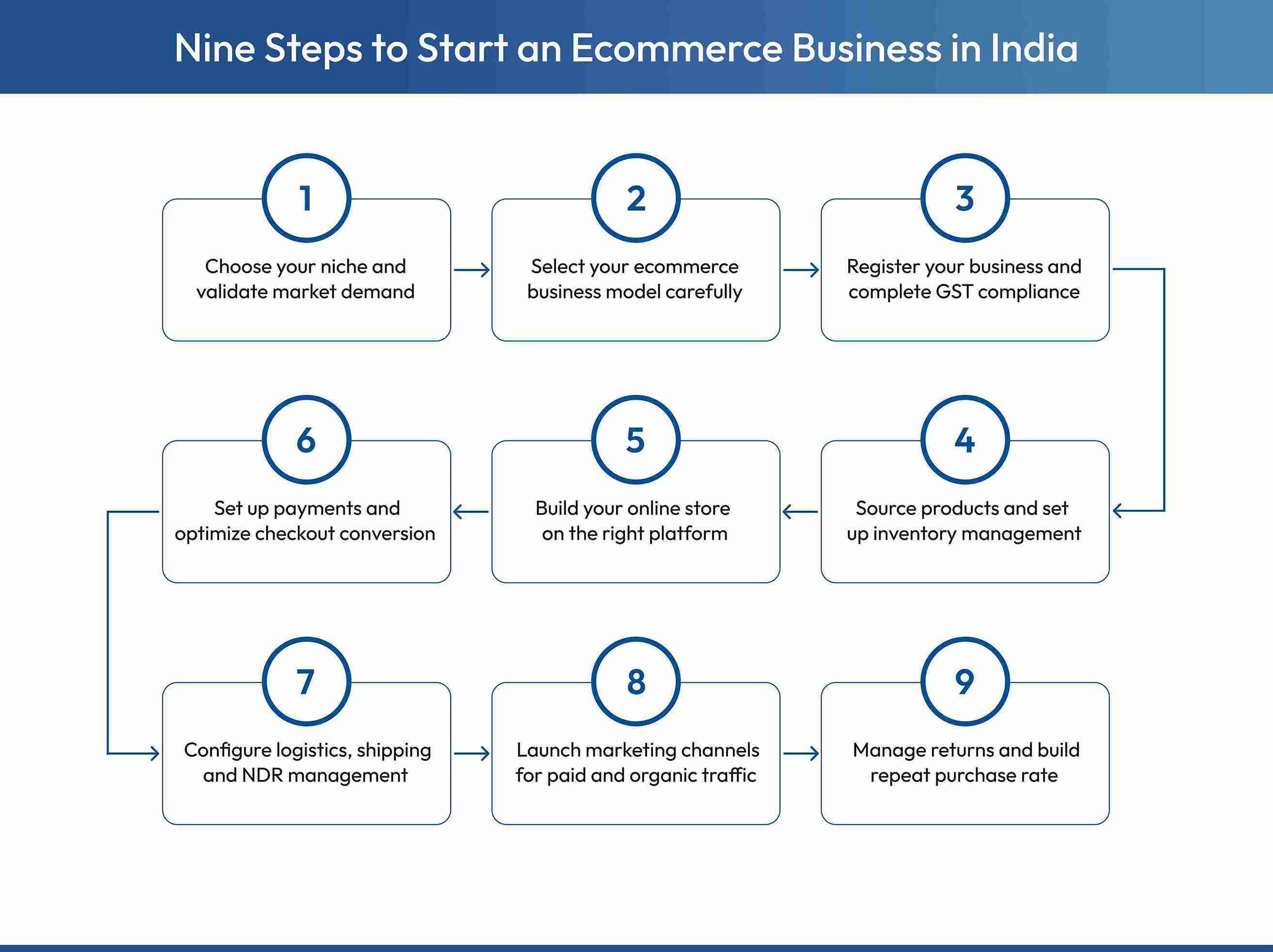
Step 7: Set Up Logistics and Shipping
- Compare Courier Options: Evaluate Shiprocket, Delhivery, Ecom Express and DTDC for coverage, reliability, per-order pricing and integration with your ecommerce platform. Choose a logistics partner whose serviceable pincode coverage matches your target audience geography.
- Set Shipping Zones and Costs: Define serviceable pincodes, delivery timelines and zone-wise shipping costs before launch to set buyer expectations accurately. Transparent shipping information on product pages and the cart page reduces surprise-driven cart abandonment at checkout.
- Protect Average Order Value: Use free shipping thresholds that encourage larger carts without hurting margins on small orders. A threshold set 20% above your current AOV lifts order value while keeping the free shipping offer accessible to most buyers.
- Improve Packaging Quality: Use secure packaging to reduce product damage, returns and negative delivery experiences that erode customer base trust. Good packaging is a brand touchpoint that influences whether a first-time buyer returns for a second order.
- Manage Failed Deliveries Quickly: Act on NDR (Non-Delivery Report) updates within hours before failed delivery attempts convert into permanent RTOs. Delayed reattempt instructions push RTO rates higher and every undelivered order represents double the logistics cost with zero revenue recovered.
Step 8: Launch Your Marketing Channels

|
Channel |
What It Does |
Best Use Case |
Timeline to Results |
|
Google Ads and Shopping |
Captures high-intent search traffic from people ready to buy. |
Best suited for launch campaigns where fast traffic and purchase intent matter. |
Immediate |
|
Social media marketing on Meta and Instagram |
Drives product discovery, awareness, and retargeting across social media platforms. |
Works well for visual categories like fashion, beauty, lifestyle, home, and gifting. |
2 to 4 weeks |
|
Search engine optimization |
Builds organic traffic through keyword research, technical fixes, and page optimization. |
Useful when you want category pages and product pages to attract search-led buyers. |
3 to 6 months |
|
Email marketing |
Nurtures leads, brings shoppers back, and drives repeat purchases from your customer base. |
Strong for welcome flows, product education, offers, replenishment reminders, and loyalty campaigns. |
2 to 4 weeks |
|
Content marketing and blogs |
Supports search engine optimization and builds authority through helpful content. |
Helps answer buyer questions before purchase and brings traffic from search engines. |
3 to 6 months |
|
WhatsApp marketing |
Recovers carts, verifies COD orders, and supports post-purchase engagement. |
A practical choice for cart recovery, COD confirmation, delivery updates, and repeat purchase nudges. |
Immediate |
|
Influencer and UGC partnerships |
Builds trust through real-use content created for social media platforms. |
Fits products that need visual proof, customer stories, creator demos, and social validation. |
2 to 6 weeks |
Step 9: Manage Returns and Build Repeat Purchase Rate
How Much Does It Cost to Start an Ecommerce Business in India?
|
Expense |
Estimated Cost |
Notes |
|
Business registration and GST |
₹5,000 to ₹15,000 |
Includes GST, licenses and trademark filing |
|
Ecommerce platform |
₹800 to ₹4,000 per month |
Shopify, WooCommerce hosting or custom |
|
Domain name and hosting |
₹500 to ₹3,000 per year |
.in or .com domain with hosting |
|
Product inventory |
₹10,000 to ₹2,00,000 |
Varies by model and category |
|
Payment gateway |
2% to 3% MDR per transaction |
Plus applicable setup fees |
|
Logistics and shipping |
Variable per order |
Based on weight, zone and courier partner |
|
Initial marketing campaigns |
₹10,000 to ₹50,000 |
First month of paid acquisition |
|
Product photography |
₹5,000 to ₹20,000 |
Quality images for product pages |
Common Challenges When Starting an Ecommerce Business and How to Solve Them
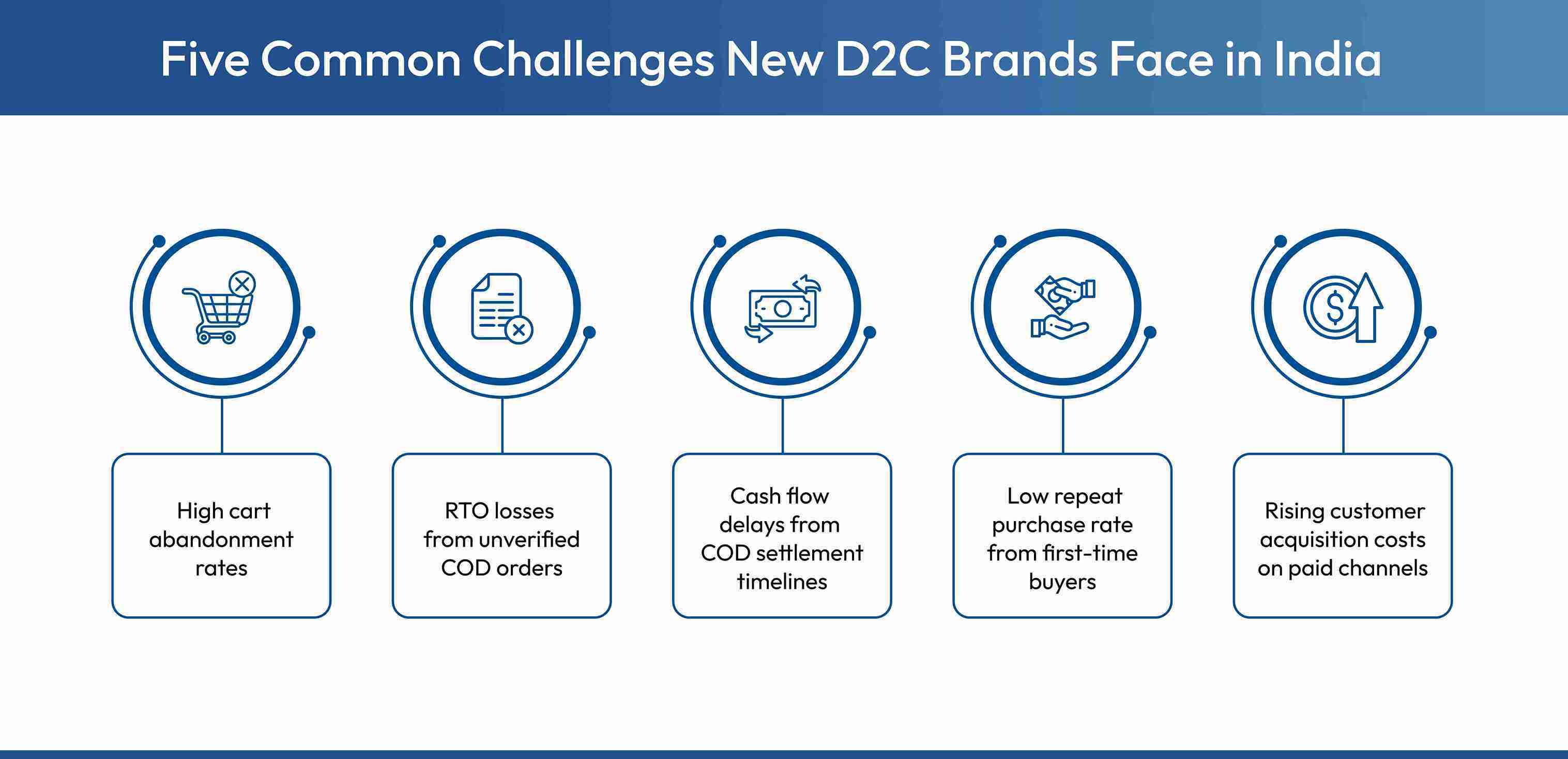
- Cart abandonment rates in Indian ecommerce range between 65% and 80%, meaning most acquired traffic leaves without completing payment.
- RTO losses from unverified COD orders erode profit margins before the brand recovers the product and restocks inventory.
- Cash flow delays from COD settlement timelines create working capital pressure during the critical early months of growth.
- Low repeat purchase rate from first-time buyers forces brands into a cycle of constantly paying for new customers through paid channels.
- Rising customer acquisition costs on Google Ads, Meta and Instagram compress the return on every paid click your marketing strategy generates.
How GoKwik Helps New D2C Brands Launch and Scale Faster
- Kwik Checkout for Checkout Conversion and RTO Control: Returning shoppers can complete purchases faster with pre-filled address details and a shorter checkout flow across the GoKwik network. Kwik Checkout uses real-time RTO intelligence to assess COD risk and show COD-to-prepaid nudges before payment.
- Kwik Pass for Frictionless Login: Account creation often slows down shoppers during repeat visits. With Kwik Pass, buyers can log in through one-tap SSO using their mobile number or Truecaller, which helps new brands reduce drop-offs and build stronger repeat purchase behavior.
- Kwik Engage for WhatsApp Marketing and Cart Recovery: Abandoned carts, COD confirmations, post-purchase flows and broadcast campaigns can be automated from one platform. This helps new D2C brands recover missed sessions through WhatsApp journeys without adding manual work for the team.
- GoKwik Cart for Higher Average Order Value: The cart view becomes a revenue opportunity before the shopper reaches checkout. GoKwik Cart shows upsells, bundle suggestions, prepaid incentives and other purchase nudges that help brands increase AOV from existing traffic.
- Return Prime for Returns Management: Refunds can drain revenue when every return becomes a cash exit. Return Prime helps brands convert unavoidable returns into exchanges or store credit, which keeps more revenue inside the brand ecosystem.
Frequently Asked Questions

AUTHOR
Vardhan Jain
Director of Product Program @ GoKwik