|
Dimension |
Traditional SEO |
Generative Engine Optimization (GEO) |
|
Primary target |
Search engine rankings |
AI-generated citations & mentions |
|
Key signal |
Keywords & backlinks |
Entity authority & multi-platform presence |
|
Content goal |
Rank for a query |
Be synthesized into an AI answer |
|
Success metric |
Position, clicks, CTR |
AI mention share, citation frequency |
|
Discovery surface |
Google, Bing SERP |
ChatGPT, Perplexity, AI Overviews, Gemini |
|
Content written for |
Human readers + crawlers |
LLMs + human readers (answer-first) |
|
Freshness |
Regular crawl cycles |
AI platforms prefer content 25.7% fresher than content cited in traditional search |
How KwikAds helped Shop Unrush boost ROAS by 37% in 3 months
How KwikAds helped Shop Unrush boost ROAS by 37% in 3 months
How KwikAds helped Shop Unrush boost ROAS by 37% in 3 months
How KwikAds helped Shop Unrush boost ROAS by 37% in 3 months
Kwik GEO
What is Generative Engine Optimization (GEO)? A Complete Guide for E-commerce Brands (2026)
 01 Jun 2026
 09 Min Read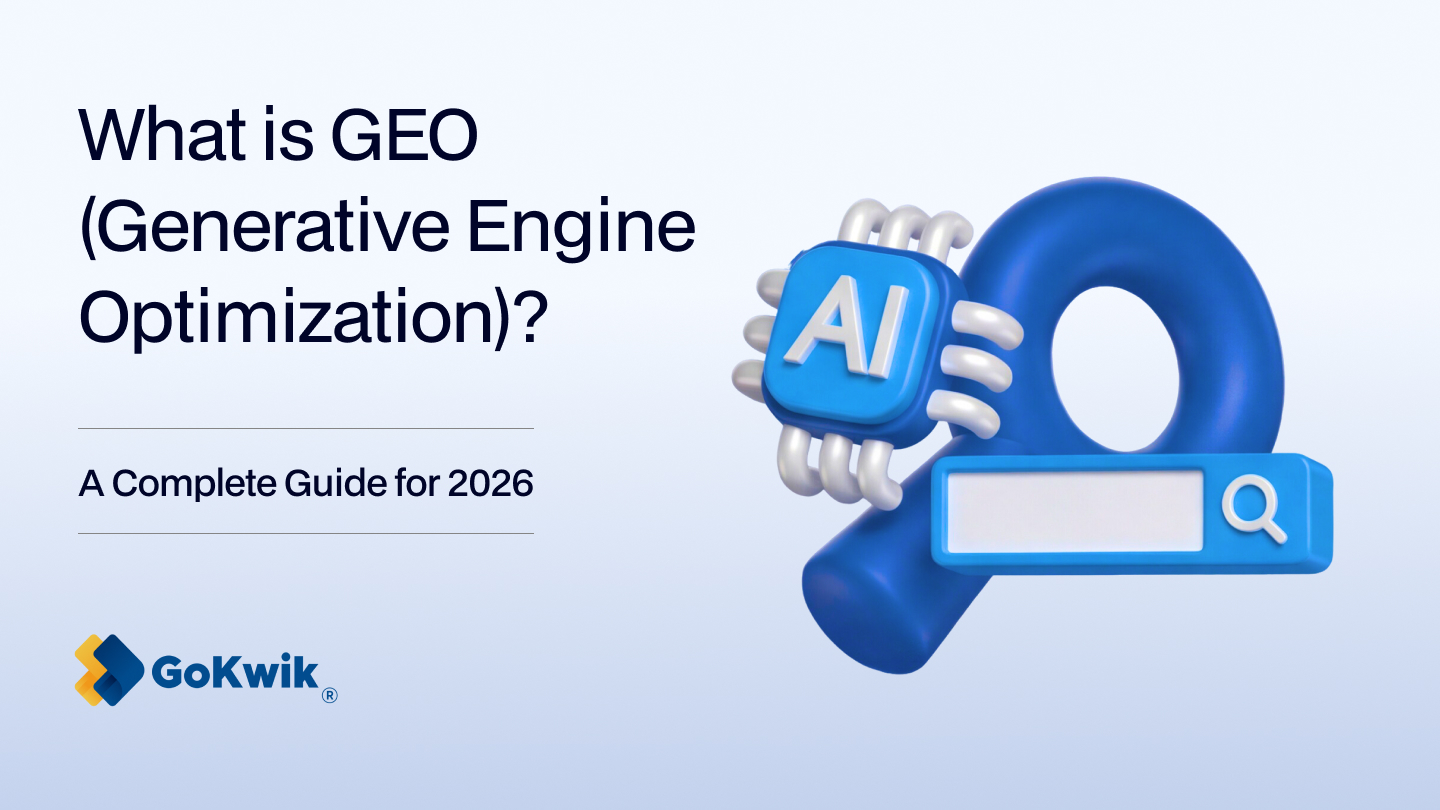
Parousia leads product marketing strategies at GoKwik, and she is an expert in driving e-commerce optimisation, conversion growth, and innovative GTM strategies. She crafts compelling messaging and creates content pertaining to D2C commerce.
Read this blog on your favourite platform
Kwik Summary
There is a fundamental shift in how people discover products, brands and information online.
Your customers are no longer typing queries into Google and scrolling through blue links. They're asking ChatGPT which skincare brand is worth buying. They're asking Perplexity to recommend the best running shoes. They're getting direct, confident answers with no need to click through to your website at all.
Your customers are no longer typing queries into Google and scrolling through blue links. They're asking ChatGPT which skincare brand is worth buying. They're asking Perplexity to recommend the best running shoes. They're getting direct, confident answers with no need to click through to your website at all.
60% of Google searches now end without a single click to any website.
AI-referred traffic to U.S. retail sites grew 693% year-over-year during the 2025 holiday season, according to Adobe Analytics tracking over one trillion retail visits. For D2C brands driving organic search traffic, this is an inflection point.
The brands that recognize this shift and adapt will own the next decade of digital discovery. The ones that don't will become invisible, not because their SEO failed, but because the game itself changed.
What is Generative Engine Optimization (GEO)?
GEO is the practice of making your brand, products, and content visible inside AI-generated answers in tools like ChatGPT, Perplexity, Google AI Overviews, Claude and Gemini.
Where traditional SEO optimizes for search rankings, getting a page to position #1 on Google, GEO optimizes for citations, mentions and recommendations within AI responses. You're essentially shaping the information environment that AI models draw from when they construct an answer.
The term was formally defined in 2023-2024 by researchers at Princeton, Georgia Tech, and IIT Delhi, who published a foundational paper establishing GEO as a discipline for improving brand and content visibility inside generative engine responses.
By early 2026, most enterprise marketing teams have a GEO initiative. Most SMB marketing teams have not started yet, which represents a significant first-mover opportunity.
Why GEO Matters for Ecommerce Brands Right Now
The numbers are no longer theoretical. AI-driven discovery is reshaping ecommerce at a pace that compresses years of adoption into months.
Adobe Analytics, which tracks over one trillion visits to U.S. retail sites, found that AI-referred traffic grew 4,700% year-over-year in July 2025. By March 2026, that momentum had only accelerated. AI traffic converted 42% better than visitors arriving from any other channel, including paid search and email.
The revenue impact is equally striking. According to Salesforce's post-holiday analysis, AI influenced $262 billion of global online spend during the 2025 holiday season.
This has direct implications for Shopify brands. A customer researching "best linen kurtas for summer" may never see your Google ranking if ChatGPT recommends three other brands by name. A shopper asking Perplexity for "cruelty-free skincare for sensitive skin" receives a curated list, and if your brand isn't in the information ecosystem LLMs draw from, you simply won't appear.
58% of users have already replaced traditional search engines with AI-driven tools for product and service discovery, and 64% of customers express readiness to purchase products suggested by AI.
The purchase funnel has shifted. The question is whether your brand is in it.
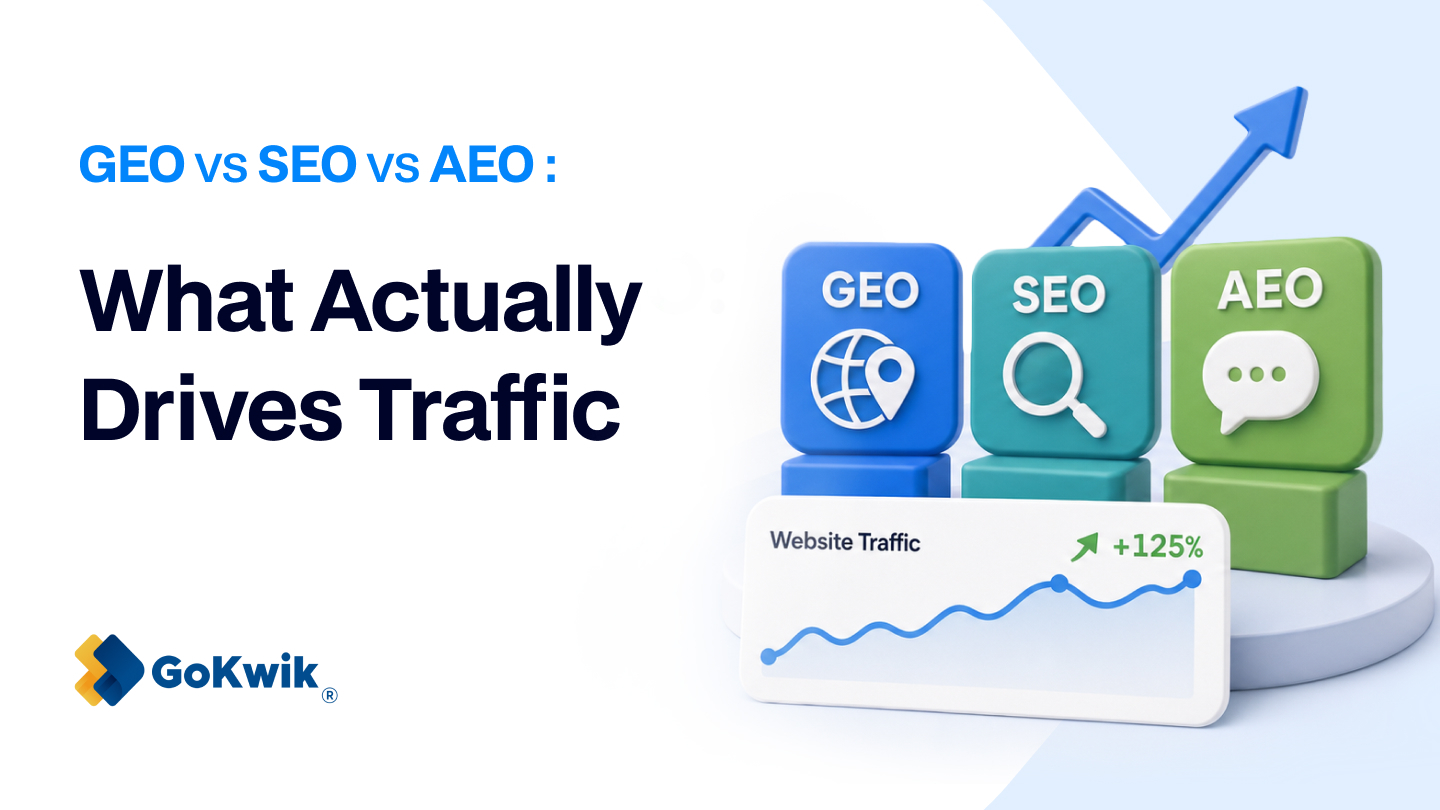
GEO vs SEO: A Sharp, Honest Contrast
GEO doesn't replace SEO, it builds on top of it.
GEO introduces specific additional requirements around content structure, citation-friendliness, and multi-platform presence that traditional SEO doesn't address.
When AI summaries were present in search results, users clicked on traditional search links in only 8% of visits. Compare this to 15% visits when no AI summaries appeared, representing a 54% drop in click-through rates.
If AI answers your customer's question without mentioning or citing you, your ranking is invisible. GEO is the discipline of being in that answer.
How Generative Engines Actually Work
To optimize for AI answers, you need to understand, at a practical level, how LLMs decide what to surface.
Generative engines combine two types of knowledge: parametric memory (information encoded during training) and real-time retrieval, known as RAG, Retrieval-Augmented Generation.
ChatGPT processes approximately 60% of requests using parametric memory and 40% via real-time search integration.
Perplexity is primarily retrieval-based.
Google AI Overviews retrieves in real time and synthesizes a 3-5 sentence answer with citations.
Four signals matter most for GEO visibility:
1. Structured clarity: LLMs prefer content that makes its meaning unambiguous, direct answers in the first 200 words, clear question-based headings, FAQ sections. LLMs are 28-40% more likely to cite content with clear formatting: hierarchical headings, bullet points, numbered lists, and tables.
2. Statistical specificity: A Princeton research found that adding specific, sourced statistics to content increases its probability of being cited by AI by 37%. Vague claims like "many brands are adopting AI" carry no value for an LLM. Precise formulations, with data and attribution, do.
3. Entity recognition: AI models think in entities, brands, products, people, categories. The more consistently your brand is mentioned, described and associated with specific concepts across the web, the more clearly a model understands who you are and what you offer.
4. Third-party authority: AI platforms trust third-party sources more than brand-owned content. Reviews, press coverage, forum discussions and editorial mentions on platforms LLMs actively index are often more powerful GEO signals than your own website.
On the technical side - Content with proper schema markup shows 30-40% higher visibility in AI-generated answers. FAQ schema, specifically, is the single highest-impact and easiest-to-implement starting point for most ecommerce brands.
The GEO Framework: A Repeatable System for Ecommerce
GEO isn't a one-time fix. It's a system. Here's how leading ecommerce brands are structuring it across five compounding pillars.
- Answer-First Content Structure
The first 200 words of any article must directly and completely answer the primary query. AI retrieval systems evaluate page relevance primarily on opening content. Rephrase H2 and H3 headings as explicit questions that match how users query AI tools. Add a TL;DR summary at the top of long-form content. Eliminate vague introductions that delay the value, they are invisible to LLMs and frustrating to humans.
- Schema Markup & Structured Data
Implement FAQ schema on every blog post, Product schema on every product page, and HowTo schema where applicable. These are machine-readable signals that tell AI exactly what your content means. On Shopify, plugins like Yoast SEO and Rank Math handle FAQ schema without touching code.
- Entity & Brand Authority Building
Ensure your brand is described consistently across your website, press coverage, reviews, and social profiles. Create a clear brand entity, what you sell, who you serve, what you stand for, and repeat it coherently everywhere. Inconsistency confuses LLMs. Consistency builds the entity recognition that gets you cited.
- Multi-Platform Presence Expansion
AI models pull from Reddit, YouTube, Google Reviews, industry publications and news sources. A brand that exists only on its own website is invisible to LLMs. Comparison articles lead all content types with 32.5% of AI citations, the single largest content category, followed by opinion pieces at 10%. Prioritize earned media, review volume on third-party platforms and community presence where AI indexes.
- Continuous Monitoring & Freshness
Track when and how your brand appears in AI-generated answers. Run tests across ChatGPT, Perplexity and Google AI Overviews monthly for your top 10-15 queries. Set up GA4 to track AI referral traffic separately. Adopt a quarterly content refresh cycle, a guide published without recent updates will gradually lose citation ground as fresher content competes.
What This Looks Like for Real Ecommerce Brands
A - Example 1: A Shopify Fashion Brand Optimizing for "Best Summer Dresses"
Under traditional SEO, the strategy is: target the keyword, build backlinks, rank on page one.
Under GEO, the starting point is discovery, open ChatGPT and ask the question your customer would ask. Note which brands appear. If yours doesn't, audit who does and why: their review presence, editorial mentions, and how their product pages are structured.
The GEO response: restructure product pages to answer "who is this dress for and when should you wear it" in the first paragraph. Pitch fashion editors for roundup coverage, comparison roundups are the most-cited content format in AI responses. Create a style guide with specific outfit pairings that becomes a reference LLMs can cite. Restructuring existing content along these lines tends to show results within 60-90 days, faster than waiting for new content to rank from scratch.
B - Example 2: A D2C Skincare Brand and AI Product Recommendations
A consumer asks Perplexity: "What's the best cruelty-free moisturizer for oily skin under ₹2,000?" it synthesizes an answer from Reddit discussions, Byrdie roundups, Google reviews and beauty editorial sites.
It names three brands. All three have strong review presence across multiple platforms, consistent brand descriptions, editorial coverage from trusted publications and product pages structured around specific skin concerns rather than generic marketing copy.
The brands not appearing have beautiful websites and solid SEO, but no multi-platform presence AI can index. Their GEO gap isn't content quality, but distribution and structure.
The fix: Expand to Nykaa reviews, seek dermatologist quotes for third-party credibility, create comparison content and restructure product descriptions around skin type, concern and occasion rather than ingredient lists alone.
The GEO Tool Ecosystem in 2026
Profound has established itself as the early category leader in AI answer monitoring, offering visibility tracking across generative engines for enterprise teams. Otterly AI and AthenaHQ are building adjacent monitoring and optimization capabilities. Semrush has integrated AI Overviews tracking into its existing SEO platform. Writesonic is embedding GEO-oriented content generation into its workflow.
What's largely absent from the ecosystem: a solution purpose-built for ecommerce, one that understands Shopify catalog structures and more all while automating implementation end-to-end.
That's the gap Kwik GEOis built to fill. Shopify-native, built for D2C brands and leveraging the diverse GoKwik merchant network.
How to Get Started?
The question isn't whether AI-driven discovery will become central to how your customers find products. The data above makes clear that it already is. The question is whether your brand will be in those answers when they ask.
Try Kwik GEO or Book a demo to see exactly how your brand appears across AI search today, and what it takes to own that visibility.

AUTHOR
Parousia Khan
Senior Product Marketing Manager @GoKwik