_problems,_benefits,_challenges_1769161193.png)
Delayed cash flow, high return rates, fraud risks, and administrative complexity are the realities facing eCommerce brands that offer cash on delivery. Yet eliminating COD isn't an option for most online retailers in emerging markets.
The numbers are striking. Approximately 60 to 65% of eCommerce orders in India are placed through COD, according to ET Prime Research. Despite explosive growth in digital payments, UPI transactions, and mobile wallets, cash on delivery remains the dominant choice at checkout.
The challenge is acute: COD orders face significantly higher return rates and operational costs compared to prepaid transactions. Understanding why customers prefer COD, trust concerns, limited digital payment access in tier 2 and tier 3 cities, and fear of receiving damaged goods, is key to managing it effectively.
This guide tackles common cash on delivery problems and outlines practical solutions to transform COD from an operational burden into a strategic advantage.
But, Why COD? A Shelter From Uncertainty
Trust in online transactions is a huge concern in India. Here, cash-on-delivery offers a sense of security to the shoppers. They’re wary of prepaying for products they haven't physically seen or touched, and it’s primarily more prevalent against brands with whom they’re engaging for the first time.
To understand how cash-on-delivery works, check out our detailed breakdown of what cash-on-delivery is.
The fear of non-delivery or receiving a damaged product further drives them towards selecting COD as a payment option. While many eventually pay via a digital payment mode at the time of delivery, the initial peace of mind offered by COD serves as a powerful motivator for shoppers to make online purchases.
However, from an eCommerce brand’s perspective, this brings along many COD challenges.
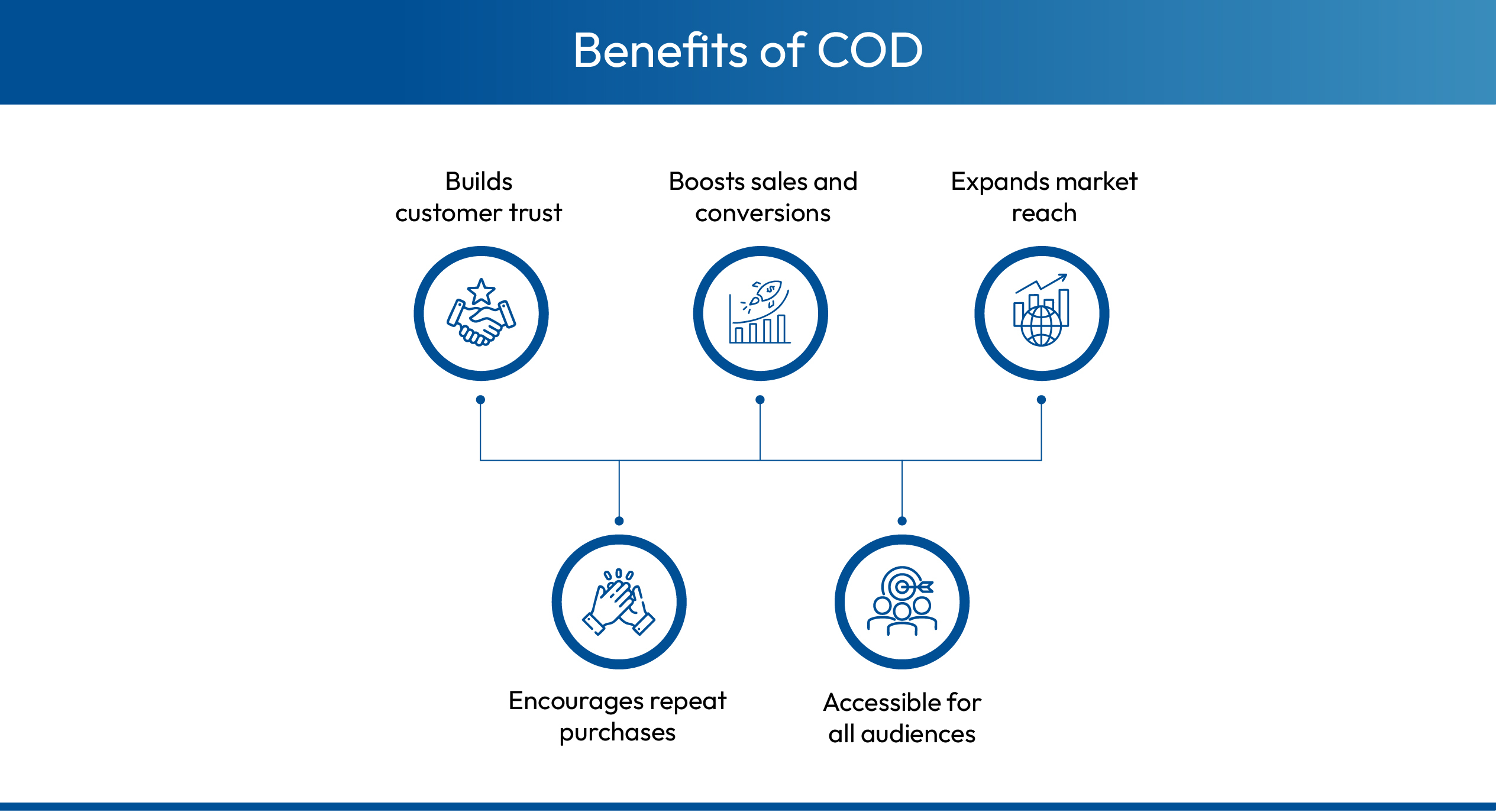
What Are The Benefits Of COD?
Despite its operational challenges, cash on delivery offers strategic advantages for eCommerce businesses:
What Are The Problems With COD?
Though it has clear benefits, there are certain Cash-on-Delivery (COD) problems that eCommerce businesses must manage carefully. Here, have a look at the COD challenges:
COD involves physical cash handling, which introduces complexity compared to instant digital payments:
COD often attracts customers who want to inspect products before committing, leading to higher return rates:
Suggested Read: Understanding RTO and Strategies to Reduce It In eCommerce With RTO Actions by GoKwik
Unlike prepaid digital payments, COD introduces delays in cash flow:
COD orders are more prone to fraud or unintentional losses:
_problems_1769161259.jpg)
The Answer: Leveraging Technology For A Smarter COD Approach
Here's where smart thinking and innovative solutions come in. While eliminating COD is not the answer, embracing its potential while managing its downsides is key. This is where the best COD apps for Shopify step into the game.
- Intelligent Checkout Interventions: These apps use data and analytics to identify potential high-risk COD orders. This could be based on factors like location, purchase history, and past RTO behaviour.
- Incentivising Prepaid Options: The app can offer discounts or free shipping for prepaying with digital wallets or credit/debit cards. This can nudge customers towards more convenient and cost-effective payment options.
- Delivery Confirmation & Feedback: These apps facilitate seamless delivery confirmation and customer feedback collection upon COD orders. This helps in dispute resolution and identifies repeat offenders.
- Real-time Tracking & Status Updates: Providing real-time order tracking reduces anxiety for COD customers and builds trust in the purchase process.
- Integrated RTO Management: Smart COD apps can help identify at-risk orders and send automated reminders to customers before delivery. This can significantly reduce RTO rates.
- Advanced Reporting & Analytics: Gain insights into COD customer behavior and trends. Use this information to optimize marketing campaigns and target high-potential demographics.
Kwik COD & Checkout By GoKwik: The Best COD Shopify App For eCommerce Brands
GoKwik has built a revolutionary solution to address the challenges of COD with its Kwik COD Shopify app. This one-click checkout app is designed to enhance the COD experience for both customers and eCommerce brands. It offers them a comprehensive set of features to boost prepaid conversions, lower RTO rates, and increase overall website sales.
Hopscotch, a leading children's fashion brand, faced the classic COD problem: high return rates were eating into profits. A major chunk of their COD orders resulted in return to origins, causing substantial profit leakage.
By implementing GoKwik's Smart COD interventions, Hopscotch identified high-risk pincodes and filtered shoppers based on their likelihood of order cancellation. The solution used network intelligence from over 100 million shoppers to classify buyers by risk level and place targeted interventions during checkout.
The impact was significant: Hopscotch reduced COD RTO orders by 12.6% while simultaneously increasing their pincode serviceability by 26%, proving that smart COD management can expand reach without proportionally increasing risk.
Want to see how they did it?
Read the complete Hopscotch case study to learn the specific strategies and interventions that transformed their COD operations.
- Smart Login and Address Validation: Ensures accurate customer information with up to 85% address prefills, reducing delivery failures and RTO.
- Diverse Prepaid Payment Methods: Offers a wide range of prepaid payment options to encourage customers to choose digital payments.
- Discounts to Increase Average Order Value (AOV): Provides incentives for customers to opt for prepaid payments, boosting the overall order value.
- Abandoned Cart Identification: Identifies and targets abandoned carts to recover potential sales.
- Quick Installation: Install and start using the COD suite within 60 seconds, making it easy to integrate with existing eCommerce platforms.
- Premium Features: Access advanced features such as risk-based RTO interventions, partial COD, smart analytics & insights, and dynamic PG routing to optimize the payment process.
What Are eCommerce COD Best Practices?
- Verify Customer Details:
Always confirm the customer’s address and phone number before shipping. Accurate details reduce failed deliveries and save time and cost.
- Set Clear COD Policies:
Clearly communicate COD eligibility, limits, and return policies on your website. This ensures transparency and reduces disputes.
- Optimize Packaging and Labeling:
Use secure, tamper-proof packaging and proper labels to prevent losses or damage during transit.
- Partner With Reliable Logistics:
Choose delivery partners experienced in COD shipments, capable of handling cash securely and efficiently.
- Limit High-Risk Orders:
Flag orders from regions with high return rates or suspicious patterns to reduce potential losses.
- Offer Incentives for Prepaid Options:
Encourage customers to choose prepaid methods by offering discounts or faster delivery, reducing COD dependency.
- Track COD Payments Efficiently:
Maintain accurate records of cash collected, pending payments, and reconciliations to prevent errors and improve financial management.
- Communicate With Customers:
Send notifications about shipping, expected delivery, and payment collection to keep customers informed and reduce cancellations.
The Bottom Line: COD Can Be Your Ally, Not Your Enemy
The question isn't whether to offer COD but how to manage it intelligently. Successful brands today use data-driven systems to identify genuine buyers, expand serviceability strategically, and reduce return rates without blocking legitimate customers.
GoKwik's Smart COD Suite analyzes over 180 Mn+ shopper behaviors to predict which orders will convert successfully. The platform reduces RTO rates while expanding pincode reach through targeted interventions like risk-based verification, prepaid incentives, and smart blocking.
Ready to optimize your COD operations? Schedule a demo to see how intelligent management can protect your profits while capturing more customers.


![WhatsApp Catalog: How To Sell Products on WhatsApp [A Complete Guide]](https://panel.gokwik.co/storage/app/public/images/use_kwikengage_for_a_seamless_whatsapp_catalog_setup__1772512572.jpg)