Table of Contents
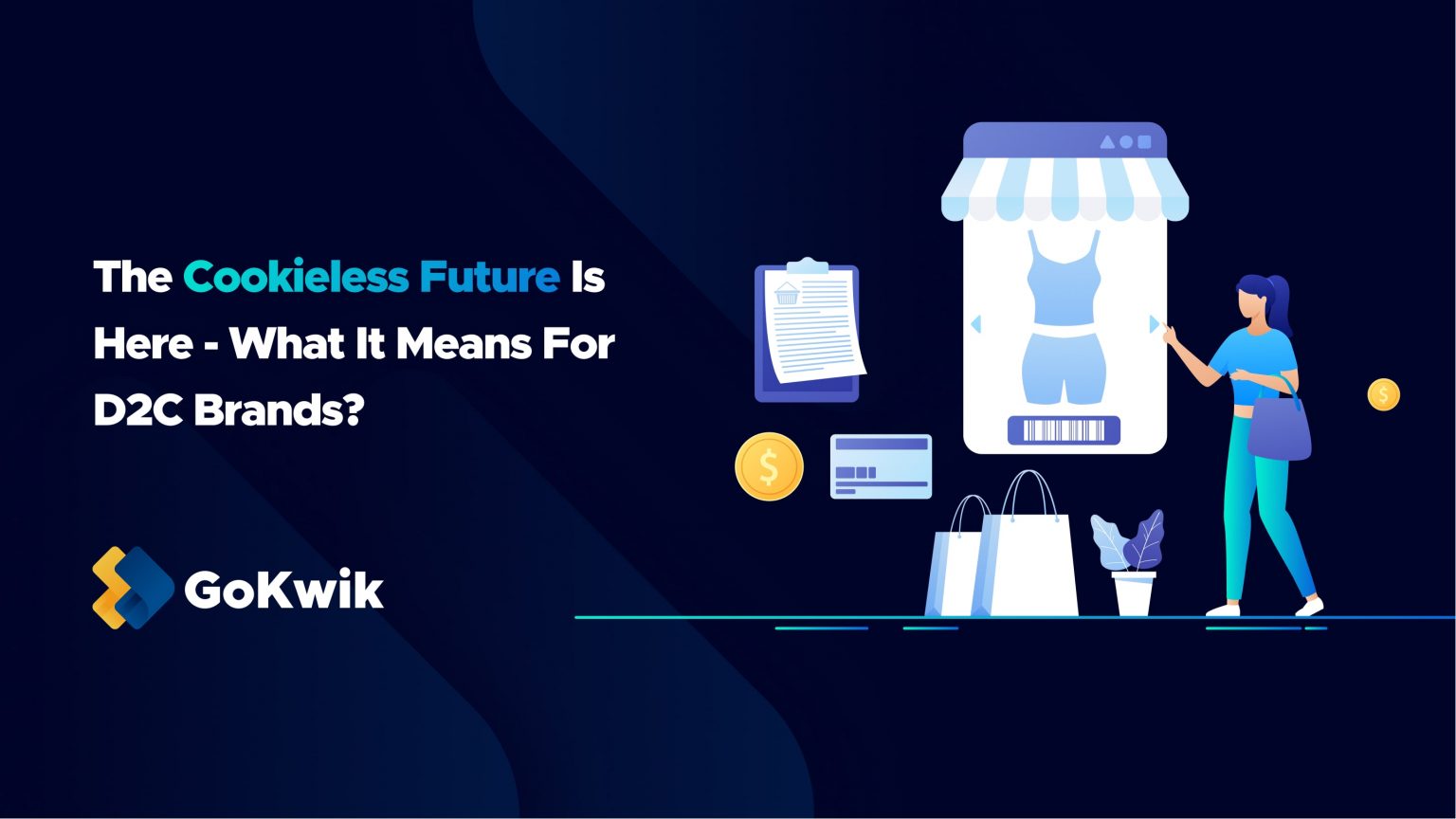
‘Google to phase out third party-cookies by 2024′. Heard of that? We bet you have. After all, it’s been making headlines for a couple of years now. Changing regulations and increasing privacy awareness have resulted in Google aiming at protecting consumer privacy by giving them control over their personal data. On the other hand, marketers are in chaos regarding how they can still serve personalised ads and reach consumers in a cookieless future. Does cookieless marketing have an adverse effect?
If you’re wondering what a cookieless future means, this blog will explain it all. We’ll talk about what a cookieless future holds for D2C brands, its advantages, drawbacks, and some cookieless future solutions that eCommerce brands can utilise to their leverage.
- Google Is Heading Towards A Cookieless Future: What Does This Mean?
- What Will Be The Impact Of Cookieless Future On D2C Brands? 1. Growth In First-party Data Reliance
- 2. Adoption Of New Measurement And Tracking Strategy
- 3. Shift To Consent Marketing
- 4. A Challenge In Targeting And Retargeting
- 1. Develop More Robust And Reliable Ad Technology
- 2. More Privacy And Control For Users
- 3. Authentic Engagement
- 4. Cost-effective Method
- 1. Grow Techniques To Capture First-party Data
- 2. Focus On Contextual Advertising
- 3. Be Transparent About Your Data Practices
- 4. Make A Community Of Brand Lovers
- 5. Prioritise Relevancy
Google Is Heading Towards A Cookieless Future: What Does This Mean?
Web browsers and devices usually keep track of every activity of consumers online with the help of third-party cookies. But the cookieless world is a state where these cookies will not be used to keep a record of the user’s data.
In its essence, a third-party cookie is a cookie that is ideally used for tracking a person’s history, searches, and browsed pages, and using this gathered data to show behavioural advertisements and retargeted ads. In other words, it helps companies identify users based on their behaviour and show them relevant ads to increase clicks and conversions.
But in the cookieless future, brands will have to opt for different strategies to collect consumer information and connect with them.

What Will Be The Impact Of Cookieless Future On D2C Brands?
D2C brands mostly rely on cookies to keep an eye on customer behaviour and run target advertisements. In the future of cookieless, moving to cookieless advertising might have a significant impact on D2C brands. And here’s how:
Cookieless future first-party data will be directly collected from various target segments including audiences, customers, website visitors, or social media followers. It has a very limited scope as compared to third-party cookies, as it might help retarget your existing customers with ads, but it becomes difficult to provide insight into new audiences who have never had any interaction with you via any medium.
If no cookies are used, brands will have to adapt different measuring and tracking strategies to measure the success of advertising campaigns. For instance fingerprints and server-side tracking.
However, fingerprints can have even more risk of losing personal data, and at times the result might be unreliable too due to use of ineffective devices. Meanwhile, server-side tracking poses a threat to data security, as it stores sensitive data. But, using the right tools can prove to be effective in this case.
In the cookieless future, D2C brands will have to take consent from consumers to collect their personal data. It’s a time-consuming process and doesn’t guarantee everyone giving go-ahead until they trust your D2C brand. And, building trust and a good relationship is a cumbersome task.
It’s an uphill task for D2C brands to target advertisements and retarget without the use of cookies. This is because, in such a case, they’ll have to rely on first party data to reach their target audience. As a D2C brand, if you’re unable to differentiate between potential customers and existing customers, you no longer are capable of targeting them with relevant offerings. For instance, you might end up advertising products to people that are already your existing customers.
What Steps Must D2C Brands Take To Prepare For The Cookieless Future?
As a D2C brand, the first thing to do is to create techniques to collect data directly from your customers. This could be via email subscription, surveys, registration, or effective methods. It helps you analyse your customer’s behaviour better.
Meanwhile, you can also run digital marketing campaigns with landing pages, where you can gather demographic information or collect data via cross-channel advertising strategies.
While third-party cookies enable you to feature ads directly in front of people who qualify for specific user profiles, contextual advertising allows you to run pay-per-click (PPC) ads on specific websites that rank for similar keywords as your ads. PPC ads allow you to reach out to a broader audience without being pushy.
It’s important that you clearly explain it to your customers where and how you’re going to utilise their data. You must make them comfortable regarding the amount of data they want to share with you. Mentioning the benefits they will receive from sharing the data will encourage them to share data. It also builds trust.
Another thing that you, as a D2C brand, can do is to use actual customers to create a community of brand lovers and gather first-party data. You can make the most out of influencer marketing to build relevant audiences on social media. You can then use this gathered customer data to retarget existing customers.
Customers love relevant and personalised experiences. Since first-party data delivers the most reliable customer data, you can make the most out of it by serving up the timeliest content. Use strategic touchpoints to create a personalised experience for customers based on their interests, preferences, location, purchases, and more. For instance, if a customer has kitchenware in his shopping cart, you can send target advertisements of kitchenware along with various coupons and offers to encourage purchase.
To Wrap-up…
Third-party cookies were never a robust foundation for advertising in the D2C space. Its demise has always been the talk of the town due to the unethical advertising approach that kept consumers’ privacy at stake.
While its demise came as good news for customers, it has raised concerns for marketers. However, there’s also a bright side to cookieless future marketing. It will prepare D2C brands to adjust and innovative new retargeting campaigns for cookieless future impact.
Since the cookieless world impact will demand an extensive operational adjustment to avoid unfavourable effects, it can help D2C brands focus on building a more privacy-sensitive and trustworthy advertising strategy.


![WhatsApp Catalog: How To Sell Products on WhatsApp [A Complete Guide]](https://panel.gokwik.co/storage/app/public/images/use_kwikengage_for_a_seamless_whatsapp_catalog_setup__1772512572.jpg)