Table of Contents
The Indian eCommerce industry is on a roll right now. Be it the marketplaces or the direct to consumer (D2C) brands, the industry is witnessing an all-time high growth. As per IBEF, the Indian eCommerce market is expected to showcase a growth of 21.5% compared to last year and reach the USD 74.8 billion mark. Meanwhile, looking at the current CAGR, it’s anticipated that the industry will reach a size of USD 300 billion by the end of FY 2030. While these are some broad metrics, the micro-level news is that most brands are going D2C. Much thanks to the outbreak of the COVID-19 pandemic, brands are increasingly realising that opting the direct to consumer approach is more fruitful in the long run. They don’t need to depend on third-party sites for sales and revenue generation.
In fact, statistics by Statista are also a testimony to this fact. According to the platform’s data, the Indian D2C segment is expected to contribute USD 12 billion by FY 2022’s end. This number will touch the USD 60 billion mark by FY 2027.
But, why are brands making the shift? Certainly there ought to be more reasons than the pandemic awakening.
In this blog, we try to decode
Let’s get started.
- D2C Model – Changing The Conventional Selling Landscape
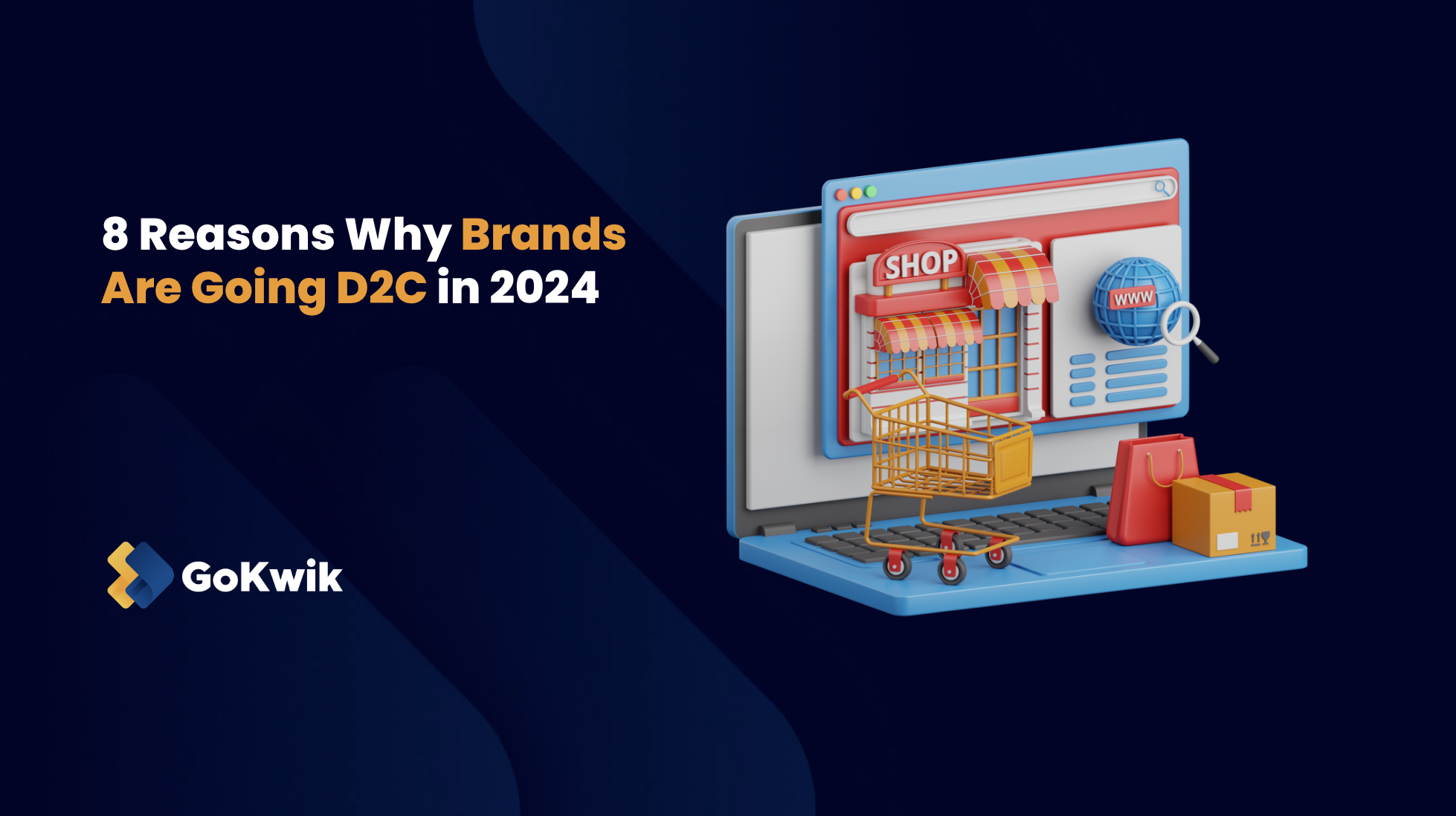
- Top Reasons Why Brands Are Going Direct To Consumer 1. Retain Customer Data
- 2. Build And Nurture Direct Relationships With Customers
- 3. Offer Better Prices
- 4. Strategically Offer Deals and Discounts
- 5. Fuel Product Development
- 6. Harness The Power Of Omnichannel Commerce
- 7. Control Over Messaging, Branding, And Reputation
- 8. Control Over Otherwise External Factors, Especially RTOs
- Why are brands going direct to consumer?
- Is it a fruitful move from a long-term perspective?
- How will this shape the future of Indian eCommerce industry?
D2C Model – Changing The Conventional Selling Landscape
While COVID-19 is much attributed to the shift – brands going direct to consumer, the trend originally started after the announcement of demonetisation in India in 2016. D2C retail companies saw a surge in people looking for their brands online but were either unable to find them or landed on third-party sites. Though that did bag them sales and opened new online streams of revenue, the potential was much higher.
Soon, COVID-19 lit a fire and online sales skyrocketed across all eCommerce segments. While companies earned a fortune during this period, encashing on every sales opportunity they got, they were still stuck paying a price for every conversion they clocked.
The commissions they paid to third-party sites and conventional retailers, the additional marketing spent and advertising cost, all added to a brand’s remorse. Meanwhile, brands started witnessing a mammoth of cheaper imitations masked under private labels entering their space and giving them massive competition.
Come 2022, the list of brands going D2C and moving away from conventional eCommerce selling platforms has exponentially increased.
In fact, according to Statista, the Indian direct to consumer segment is expected to contribute USD 12 billion by the end of FY 2022 and will touch the USD 60 billion mark by FY 2027. The percentage earlier was way less than you can imagine.
Brands also realised that D2C is a low entry barrier and offers much more space to expand and scale than other known online selling methods.
To give you an example, a major chunk of the emerging D2C brands in India have taken the direct to consumer road and are now witnessing better growth than ever. They’re clocking more conversions, connecting with customers on ground zero and building products that they need, personalising their buying experience and solving many other issues.
But there’s much more to this. In the section below, we’ll highlight the actual reasons why brands are going D2C and leveraging it to their benefit.

Top Reasons Why Brands Are Going Direct To Consumer
This is apparently one of the primary reasons behind why brands are going D2C. While selling products on third-party sites, brands have to rely on the platforms for customer data to conduct business analysis, study customer behaviour, etc.
Meanwhile, when a brand sells products through its on-site, it can track and gather all the information first-hand.
With one’s own D2C platform, brands can also track returns, address customer complaints (or praises), enhance marketing strategies, improve targeting and messaging, and do much more.
Consider this data as a gold mine for direct to consumer brands, which, otherwise, is not accessible to them when selling products via third-party sites.
As a general fact, when you’re selling products via a third party, you can’t expect them to treat your customers the same way as you.
Will they put in those extra efforts? Probably not. The result? Average customer experience with no guarantee of repeat purchase.
This is exactly what direct to consumer stands opposite of. Going D2C – direct-to-consumers – gives brands the opportunity to build and nurture healthy relationships with their prospects and customers.
For instance, if a customer’s order doesn’t arrive on time or has been delivered damaged, a third-party site may or may not take ownership or make complete efforts to solve customer issues. Meanwhile, a D2C brand becomes the eyes and ears of its customers to ensure that every problem or issue raised is addressed at the earliest.
Since D2C means going directly to the customers, brands cut out intermediaries and retain their profit margins. They don’t have to pay any commission to a third-party site for selling their products, spend money on promotion activities or run ads to survive the cut-throat competition on these platforms. They can simply utilise these saved funds to enhance customer experience and explore more marketing and selling channels.
Additionally, since they’re selling products directly from their platform, they can offer better prices to customers, which are otherwise expensive due to the involvement of middlemen.
Another reason why brands are going D2C is that they retain the ability to call shots on deals, discounts, and sales. They can also do innovations and use discounting features that increase the chances of conversions.
For instance, Gokwik’s dynamic incentivisation feature allows direct to consumer brands to offer multiple percentages of discounts to customers depending on their profile and propensity to prepay. Brands can also choose from GoKwik’s 200+ discount configurations to offer the best discount options that help maximise revenue and reduce cash burn.
As mentioned above, customer data is like a gold-mine. Brands can use this gold mine to study customer behaviour, analyse trends, and even use it to fuel product development.
For instance, by studying customer behaviour patterns on their website, eCommerce brands can take a call to enhance their product offerings, maybe enhance upselling opportunities, or even embed smart ways to optimise the customer journey.
Omnichannel commerce is a means to utilise multiple channels to increase sales and provide a unified customer experience irrespective of where the customer shops.
As per a study conducted by Harvard Business Review, nearly 73% of consumers use multiple channels to shop during their entire purchase journey.
Omnichannel commerce is fast becoming a norm that customers expect. And, brands can fullfil this expectation by going D2C. In absolute honesty, not having a unified experience can cost a brand potential sales and customer loss as well.
This is another reason why brands are moving towards the direct to consumer world.
If anything, control is one that every brand wants to retain. Control over pricing, messages, branding, and especially control over reputation. Having total control over various touch points can help brands provide customers with a high-quality experience no matter the channel they engage with to make a purchase.
Meanwhile, brands can also control the messages that are sent to customers. They can leverage personalisation to increase a sense of humanly feeling and compel customers to take the desired action.
For instance, Tellephant enables brands to use WhatsApp for communication. Be it sending order detail updates to recovering abandoned carts or even informing about upcoming sales or new product launches, eCommerce brands can custom-create messages and push them across to customers to increase personalisation.
Brands are going D2C and in this respect, they must have complete control over their data as this will give them the ability to build their public image the way they want. They can use influencer marketing to build a strong reputation in the market and leverage google ads to increase awareness.
The legacy issue of return-to-origin (RTO) is one of the major reasons behind brand profit loss. RTO refers to a situation in which a customer refuses delivery at the doorstep or cancels the order before it’s delivered. This especially happens if it’s a cash-on-delivery (COD) order. This results in a brand incurring additional costs including reverse logistics, repackaging, inventory blockage, etc.
Though brands have less control over RTOs when selling products via third-party sites. They can easily solve this problem via their direct to consumer sites.
GoKwik offers one of the advanced RTO Protection Suits that D2C brands can use to reduce return-to-origins. The Suite enables brands to,
The USD1 Billion Club
According to Fortune India, about 600 brands have already adopted the D2C selling model in India. They’re actively contributing immensely to the eCommerce revenue. However, many are still speculating on their options.
This blog is a means to highlight why going direct to consumer is the need of the hours, especially in 2023. Brands can enjoy better control over their profits. They can offer excellent shopping experiences to customers. And, at the same time, take smarter business decisions as well.


![WhatsApp Catalog: How To Sell Products on WhatsApp [A Complete Guide]](https://panel.gokwik.co/storage/app/public/images/use_kwikengage_for_a_seamless_whatsapp_catalog_setup__1772512572.jpg)